JBL Dock · Loading dock guidesEditorial draft · Updated 18 October 2026
Practical selection and project-planning information. Final equipment details require project confirmation.
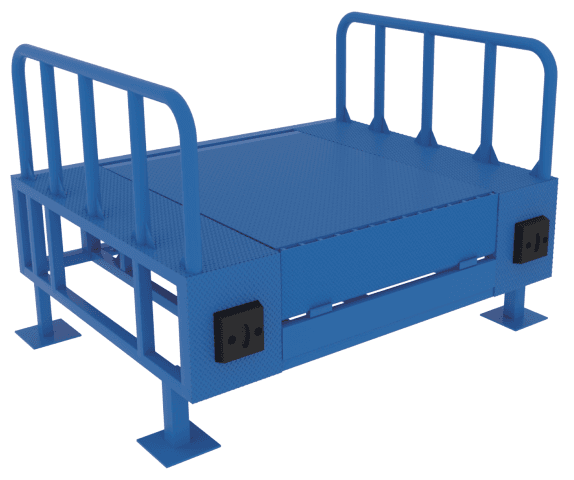
Product illustration · Illustrative reference, not a completed JBL Dock project.
Your warehouse drawing shows a dock height, but the vehicles arriving at the site are not all the same. Before fixing the civil design, build a record of the actual vehicle range and the handling method. A nominal height copied from another warehouse can miss the conditions your bay will face.
Short answer
Determine the dock height from the vehicles and handling process the bay must serve. Record the range of vehicle deck heights and operating conditions before selecting the equipment or fixing the civil design.
Start with the vehicle range
List the vehicle types using the bay, including occasional deliveries. Record deck heights under the conditions relevant to loading and unloading. A single nominal vehicle height can hide a difficult transfer at another point in the operation.
Review the handling equipment
Identify the forklift or other handling equipment and collect its operating information. The required transfer slope, clearances, load distribution and ability to cross the interface must be checked for the selected arrangement. Do not treat the rated payload of a forklift as its total operating weight.
Record the fixed site constraints
For an existing building, measure the actual dock height, approach conditions and door opening. Record pit dimensions and obstructions. For a new project, coordinate the civil drawings with the equipment supplier before treating any dimension as final.
Compare a dock, a ramp and a lift
A fixed dock arrangement, mobile ramp and lifting platform solve different interface problems. Space, transfer method and operating frequency should guide the comparison. A product label alone is not a selection calculation.
Prepare a dimensioned brief
Provide a section drawing showing the building floor, yard level and vehicle deck range. Add vehicle and forklift information, loading frequency, quantity and site photographs. Leave unknown dimensions marked for confirmation.
Vehicle and site information to compare
Compare / record
Information to review
Decision or confirmation
Dock height
Finished dock floor relative to the approach
Use a surveyed reference, not an unfinished floor level.
Vehicle deck heights
Lowest and highest relevant positions
Identify the vehicle and loading condition for each measurement.
Approach
Gradient, slope changes and parking position
Show the approach in section with the vehicle.
Handling equipment
Operating data and clearances
Ask the supplier to review the transfer geometry.
Site constraints
Pit, door opening and existing services
Distinguish fixed constraints from items still open to design.
Supplier equipment reference. Illustrates the product family; not an approved installation drawing or a completed JBL Dock project.
Before you confirm the selection
Do not choose a leveler length merely because it matches an existing catalogue row. Compare the proposed geometry with the vehicle range and handling-equipment limits. Where the site is at ground level, discuss a ramp or lift arrangement before committing to a fixed dock.
Catalogue basis: JBL Dock Loading Dock Equipment Catalogue V1.2, review edition, pages 4–5, 13, 15. Unresolved source entries are not approved specifications.
Is there one standard dock height for every warehouse?
No. Begin with the vehicles and operating process. A common dimension used elsewhere does not demonstrate suitability for your fleet.
Start with the information you have.
Share your question, site photos or equipment details. Mark anything you have not yet measured — you can begin without a complete specification.
Source basis: JBL Dock Catalogue V1.2 review edition and the website planning framework. Product selection, installation and maintenance must follow the applicable equipment documents and project review. This guide does not establish certified performance or final dimensions.
Tell me what you would like to build, replace or improve—even if you are not sure which equipment you need. A short message or a photo is a good place to start.
I can help you clarify your requirements and identify the details to check, so you can compare options with a clearer understanding. You do not need a complete drawing or specification to get in touch.