Dock leveler capacity: is forklift lifting capacity enough?
JBL Dock · Loading dock guidesEditorial draft · Updated 18 October 2026
Practical selection and project-planning information. Final equipment details require project confirmation.
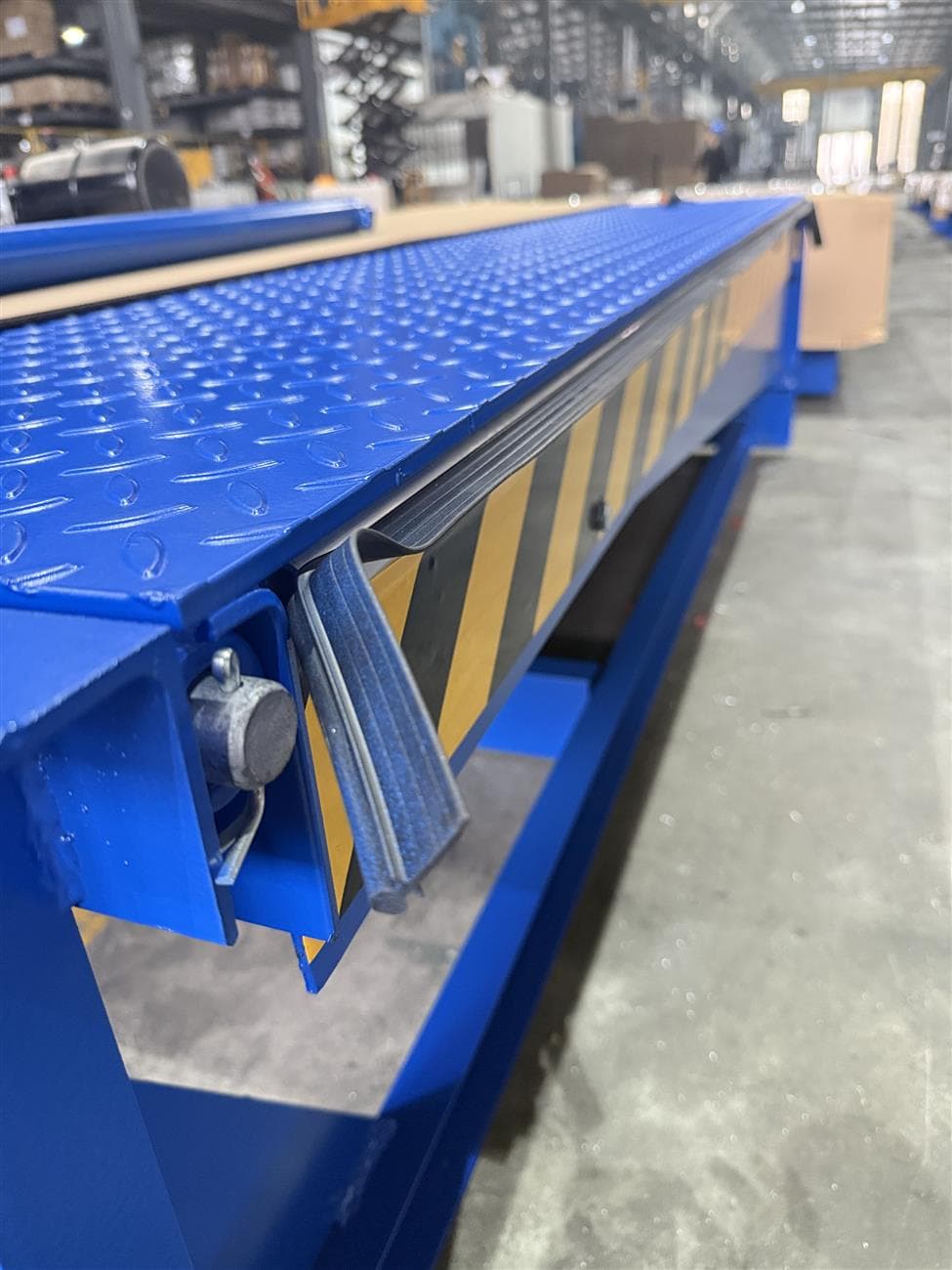
Supplier reference photo · Illustrative reference, not a completed JBL Dock project.
A quotation says 6, 8 or 10 tonnes, while your forklift has a different capacity label. Those numbers do not answer the same question until their rating basis and operating conditions are defined.
Short answer
No. A forklift lifting-capacity label does not describe the total moving load imposed on a dock leveler. Provide the truck operating weight, attachments, maximum carried load, wheel and axle information, travel conditions and frequency. Ask the supplying manufacturer to confirm the rating basis and suitability of the proposed configuration.
Separate payload from total operating weight
The pallet or goods are only part of the moving load. Record the actual handling-equipment configuration and identify which items are already included in its operating-weight figure. Include relevant attachments and accessories without double counting. A forklift sold by its lifting capacity is not identified sufficiently for leveler selection.
Ask what the quoted capacity actually means
Static, dynamic and rollover terminology must be interpreted using the proposed manufacturer’s documentation. Do not assume that identical numbers from two suppliers have the same test or operating basis. Ask for the definition, operating conditions and exclusions in writing. A calculation method published for another manufacturer must not be copied directly to a JBL Dock configuration.
Describe how the equipment crosses the platform
Provide wheel layout, axle loads and tyre information where available, along with the site height difference and traffic frequency. Record unusual approaches, concentrated loads and changes of handling equipment. These inputs allow the appropriate technical team to review the arrangement; they do not provide a universal conversion from forklift capacity to platform capacity.
Check the complete load path
The review concerns the deck, lip, frame, supports and site interfaces together. A thicker deck plate alone is not proof of a higher permitted operating load. Ask which drawing and construction configuration the offered rating covers, and whether any installation requirements affect it.
Keep the selection record with the equipment
Keep the confirmed load basis and equipment identification available for future changes. A new forklift, heavier product or different operation should trigger a review rather than an assumption that spare capacity exists. Until the configuration is confirmed, use the enquiry to collect information rather than announce a selected capacity.
Inputs for a manufacturer load review
Compare / record
Information to review
Decision or confirmation
Truck operating weight
Actual configuration and included accessories
Do not substitute rated lifting capacity.
Carried load
Maximum relevant goods and pallet weight
Identify what is already included in other figures.
Load application
Wheels, axles, tyres and load distribution
Total mass alone does not describe contact loading.
Operation
Traffic frequency and transfer geometry
Provide real operating conditions.
Proposed rating
Definition, applicable configuration and limitations
Obtain written selection confirmation.
Supplier equipment reference. Illustrates the product family; not an approved installation drawing or a completed JBL Dock project.
Before you confirm the selection
The review catalogue lists separate dynamic, static and forklift columns. They are not an approved conversion rule. In particular, the forklift column does not establish the actual total loaded operating weight of your equipment.
Catalogue basis: JBL Dock Loading Dock Equipment Catalogue V1.2, review edition, pages 5, 7, 9, 11. Unresolved source entries are not approved specifications.
Can I use another manufacturer’s capacity multiplier?
No. Use the selected manufacturer’s rating method and configuration-specific assessment. Do not transfer a generic factor across unrelated designs.
Start with the information you have.
Share your question, site photos or equipment details. Mark anything you have not yet measured — you can begin without a complete specification.
Source basis: JBL Dock Catalogue V1.2 review edition and the website planning framework. Product selection, installation and maintenance must follow the applicable equipment documents and project review. This guide does not establish certified performance or final dimensions.
Tell me what you would like to build, replace or improve—even if you are not sure which equipment you need. A short message or a photo is a good place to start.
I can help you clarify your requirements and identify the details to check, so you can compare options with a clearer understanding. You do not need a complete drawing or specification to get in touch.