Define the transfer route
Show where the vehicle parks, where the goods begin and end, and which handling equipment moves between them. Record the level differences and approach space.
Practical selection and project-planning information. Final equipment details require project confirmation.
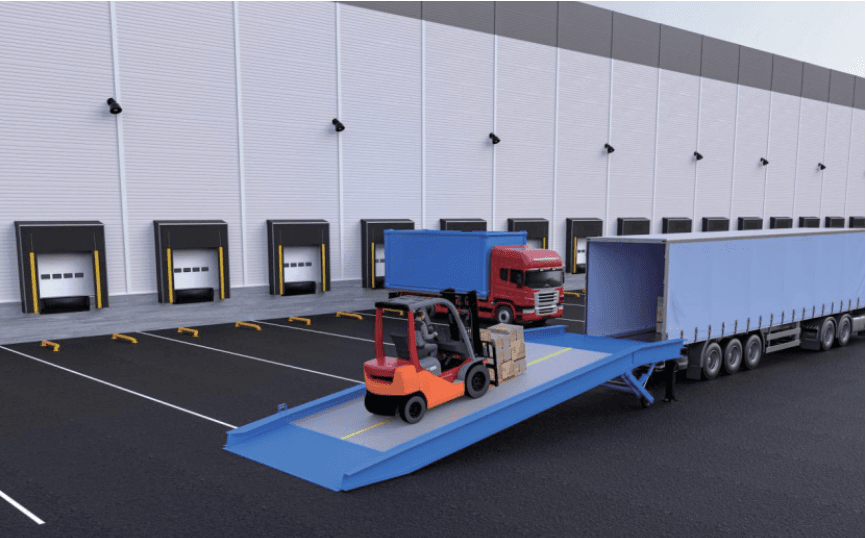
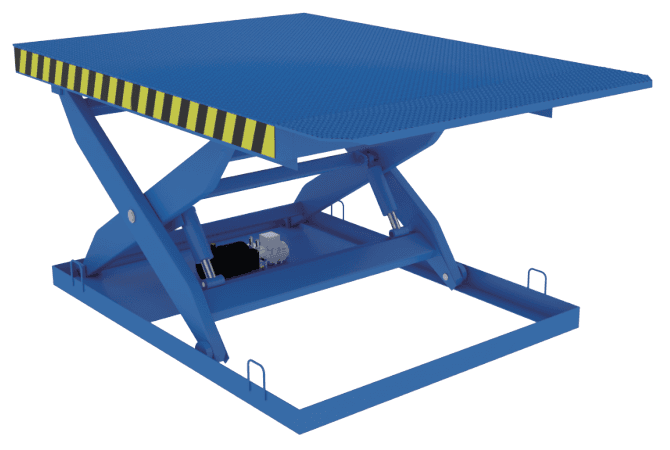
Your warehouse has no fixed loading dock. Before choosing a mobile ramp or lifting platform, sketch the path of the goods and handling equipment. The available route and levels may be more important than the product label.
A yard ramp uses an inclined travel route; a scissor lift dock leveler changes the transfer height with a platform. Compare available space, vehicle height, handling method and load distribution before choosing an approach for a site without a fixed dock.
Show where the vehicle parks, where the goods begin and end, and which handling equipment moves between them. Record the level differences and approach space.
A ramp requires review of the ground, operating slope, vehicle interface and handling-equipment limitations. Do not assume that a forklift can use every available ramp configuration.
A lifting platform requires review of travel, platform geometry, load distribution, transfer plates, guarding and operating sequence. Site-specific design and installation responsibilities need to be agreed.
Include civil works, access, controls, installation and required documentation in the comparison. Share the layout and known dimensions; missing information can be identified during the enquiry.
| Compare / record | Information to review | Decision or confirmation |
|---|---|---|
| Movement | Yard ramp: inclined travel | Lift platform: change of platform height. |
| Space | Review approach, ramp footprint and vehicle position | Review platform, transfer and exclusion space. |
| Handling method | Check forklift limitations against the proposed route | Check how goods enter, rest on and leave the platform. |
| Ground and structure | Review support and ground conditions | Review foundation, mounting and transfer interfaces. |
| Specification | Confirm gradient and loaded operating limits | Confirm travel, load distribution and guarding. |
JD-2008 catalogue ranges are indicative and not a model-specific operating approval. JD-2003 requires a confirmed platform drawing and transfer sequence. If neither arrangement fits the route, revisit the layout rather than force a product into the available space.
Catalogue basis: JBL Dock Loading Dock Equipment Catalogue V1.2, review edition, pages 8–9, 15. Unresolved source entries are not approved specifications.
No. Review the actual ramp configuration, route and forklift operating limits. Mobility does not establish compatibility.
Share your question, site photos or equipment details. Mark anything you have not yet measured — you can begin without a complete specification.
Discuss your requirements →Source basis: JBL Dock Catalogue V1.2 review edition and the website planning framework. Product selection, installation and maintenance must follow the applicable equipment documents and project review. This guide does not establish certified performance or final dimensions.
← Browse all guides