JBL Dock · Loading dock guidesEditorial draft · Updated 18 October 2026
Practical selection and project-planning information. Final equipment details require project confirmation.
Product illustrations · Illustrative reference, not a completed JBL Dock project.
You have received offers for both hinged and telescopic lips. Rather than choosing the more expensive arrangement automatically, ask what difference it makes at your vehicle interface and whether the drawing demonstrates the required fit.
Short answer
A hinged lip rotates outward from the deck; a telescopic lip extends from it. Selection depends on the vehicle interface, required reach, door arrangement and installation geometry rather than a universal preference for either type.
What changes at the vehicle interface?
The lip movement changes how the bridge meets the vehicle deck. Explain the vehicle range and any obstructions or tail-lift arrangement to the supplier. Confirm the supporting contact and operating procedure for the actual configuration.
What should the comparison include?
Compare working geometry, usable width, lip movement, stored position, controls and maintenance access. Obtain drawings for both proposed configurations. Published family dimensions cannot replace the project interface drawing.
How does the door affect selection?
The door closing line and leveler stored position must be coordinated. For temperature-controlled projects, review the shelter and sealing arrangement alongside the door. A particular lip type alone does not establish thermal performance.
What information supports a quotation?
Provide dock and truck deck heights, vehicle photographs, pit dimensions, forklift operating data, loading frequency and power supply. Ask the supplier to identify the selected configuration and drawing revision in the quotation.
Hinged and telescopic lip comparison
Compare / record
Information to review
Decision or confirmation
Lip movement
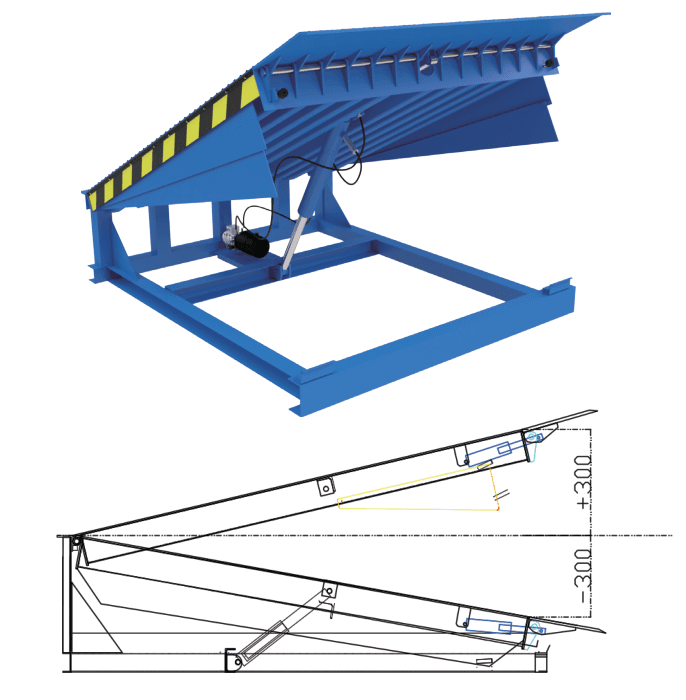
Hinged: rotates outward
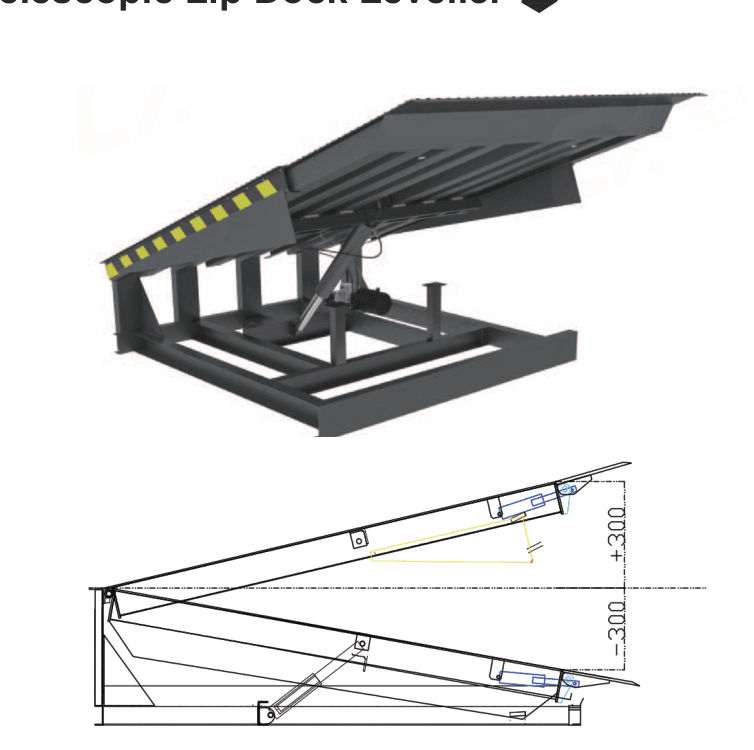
Telescopic: extends from the platform.
Interface review
Check swing path and contact
Check required reach, extension and contact.
Stored arrangement
Confirm deck and lip position
Confirm retracted lip and door relationship.
Civil interface
Use the selected frame and pit drawing
Do not assume the same pit suits both types.
Order definition
Record platform, lip, controls and load basis
Family reference alone is not a complete configuration.
Supplier equipment reference. Illustrates the product family; not an approved installation drawing or a completed JBL Dock project.
Before you confirm the selection
JD-2001 and JD-2002 are family references, not interchangeable order codes. The review catalogue has unresolved dimensional entries, so no pit or reach should be taken from those entries without a corrected drawing. A telescopic arrangement does not by itself establish insulation or energy performance.
Catalogue basis: JBL Dock Loading Dock Equipment Catalogue V1.2, review edition, pages 4–7. Unresolved source entries are not approved specifications.
Does a telescopic lip always make the better choice?
No. It adds a different reach arrangement. The appropriate choice depends on the vehicle interface, layout and confirmed operation.
Start with the information you have.
Share your question, site photos or equipment details. Mark anything you have not yet measured — you can begin without a complete specification.
Source basis: JBL Dock Catalogue V1.2 review edition and the website planning framework. Product selection, installation and maintenance must follow the applicable equipment documents and project review. This guide does not establish certified performance or final dimensions.
Tell me what you would like to build, replace or improve—even if you are not sure which equipment you need. A short message or a photo is a good place to start.
I can help you clarify your requirements and identify the details to check, so you can compare options with a clearer understanding. You do not need a complete drawing or specification to get in touch.